

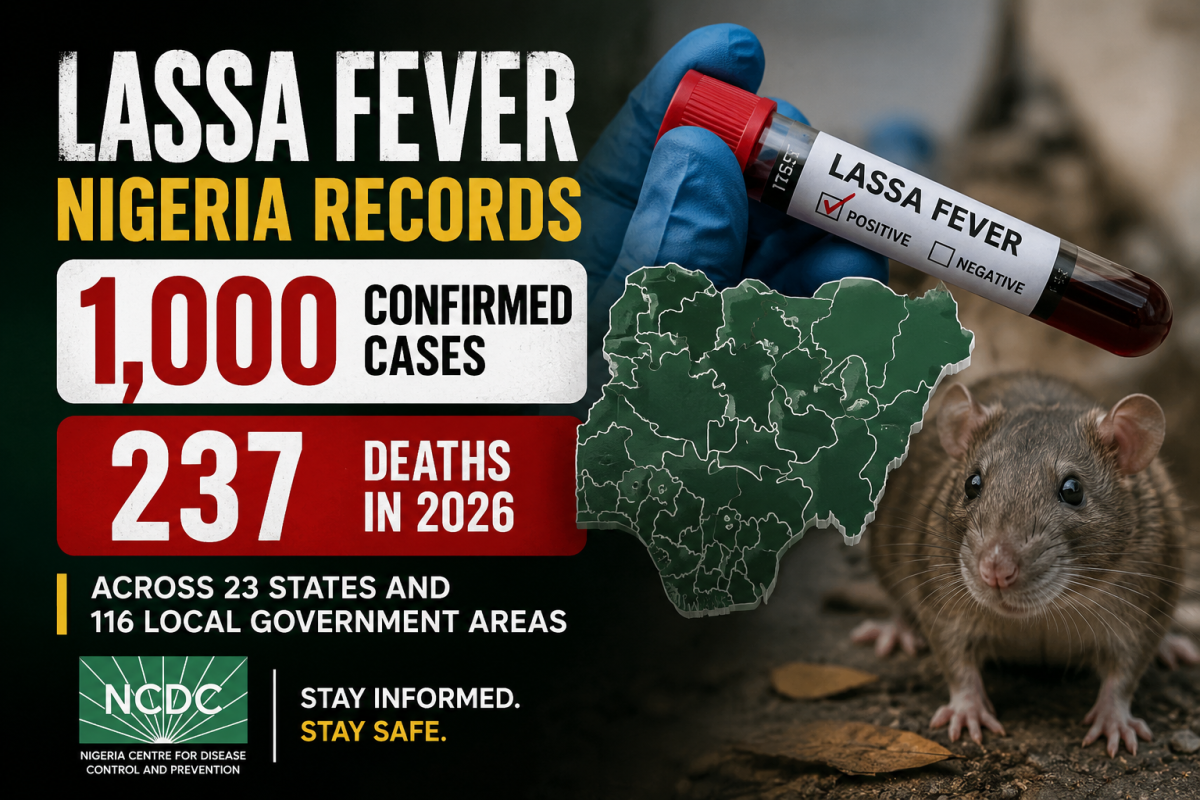
Nigeria has recorded 1,000 confirmed cases of Lassa fever and 237 deaths since the beginning of 2026, according to the latest figures from the Nigeria Centre for Disease Control and Prevention (NCDC).
The outbreak has spread across 23 states and 116 Local Government Areas, with health authorities reporting a case-fatality rate of about 23.7 per cent among confirmed cases.
The latest development has renewed concerns over the continued impact of the viral haemorrhagic disease, particularly as health authorities and medical experts point to delayed presentation at healthcare facilities and the cost of treatment as factors contributing to deaths.
According to reports citing the NCDC situation report, 53 healthcare workers have also been infected with Lassa fever during the outbreak, underscoring the risks faced by frontline health personnel.
The latest figures include 37 newly confirmed cases and eight deaths recorded over epidemiological weeks 29 and 30, bringing the cumulative figures to the current 1,000 confirmed cases and 237 deaths.
Lassa fever is an acute viral illness that can cause severe disease and death, particularly when diagnosis and treatment are delayed. The disease is endemic in Nigeria and is transmitted primarily through contact with food or household items contaminated by infected multimammate rats.
The NCDC continues to publish regular situation reports as part of its surveillance and response activities. Its Lassa fever surveillance records provide updates by epidemiological week and track confirmed cases and deaths across affected states.
Health authorities have continued to emphasise early presentation, appropriate infection-prevention measures and prompt medical attention for people who develop symptoms compatible with Lassa fever.
The latest figures make the outbreak one of Nigeria's significant ongoing public-health challenges in 2026, with the spread across more than 100 LGAs placing additional pressure on healthcare facilities and frontline workers.



Comments (0)
Leave a Comment
No comments yet. Be the first to share your thoughts.