

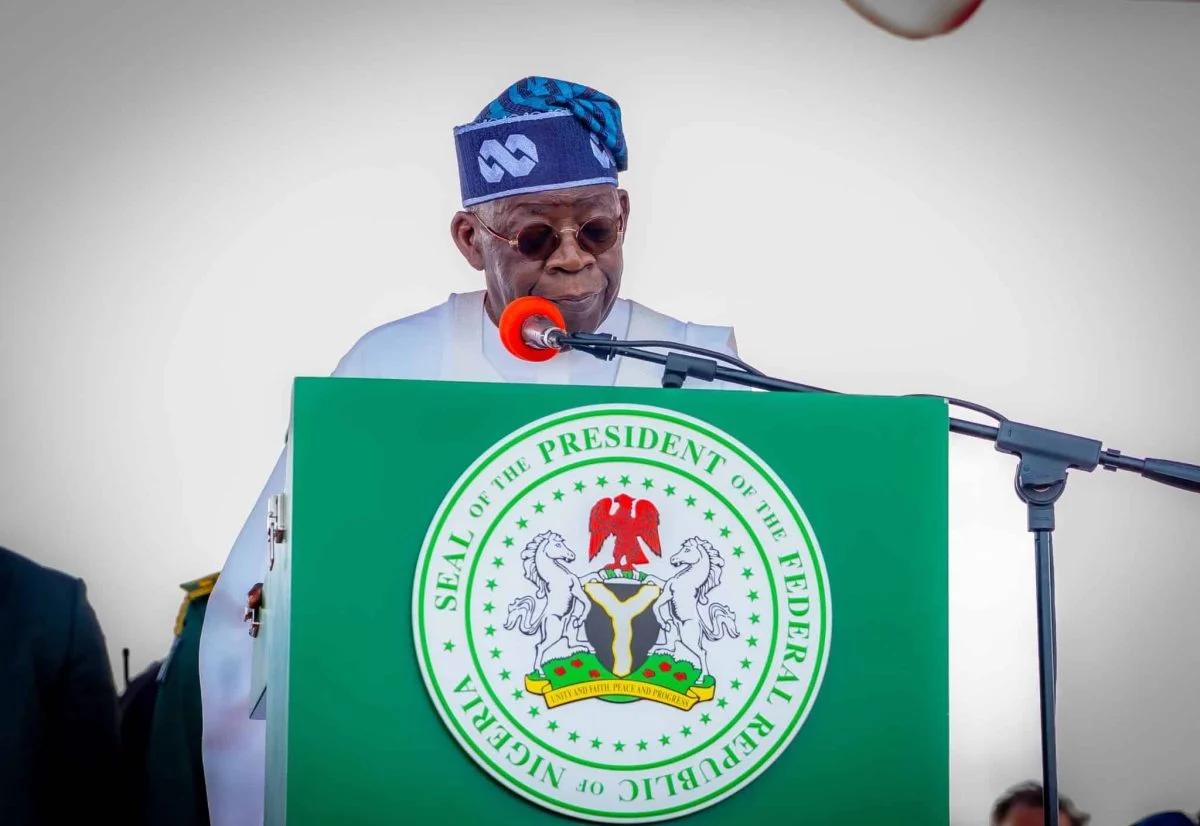
The President has directed the Minister of Finance and Coordinating Minister of the Economy, Taiwo Oyedele, to coordinate the exercise, the Presidency announced on Friday.
The directive followed a Federal Executive Council resolution of August 19, 2026, which was prompted by findings from the Independent Corrupt Practices and Other Related Offences Commission (ICPC) on irregularities within government payroll and administrative systems.
The Presidency said the exercise would investigate how fictitious or ineligible individuals gained access to government payrolls and how entities without proper legal status were able to obtain recognition and access public resources.
The development could trigger a far-reaching review of the Federal Government's personnel, payroll and institutional architecture.
The first phase of the audit will focus on the Integrated Personnel and Payroll Information System (IPPIS) and related platforms used to manage government employees, salaries, pensions and public finances.
Auditors will investigate reported cases of ghost workers and payroll fraud, reconcile figures identified by the ICPC and establish how fictitious or ineligible individuals were enrolled in government systems.
The investigation will not be limited to identifying questionable names on government payrolls.
It will also examine the processes through which personnel are recruited, registered, verified and paid, with the aim of determining where existing controls may have failed.
The government wants to know whether irregular payments resulted from administrative mistakes, weaknesses in technology or deliberate manipulation of government systems.
The forensic review will also examine the relationship between IPPIS and other government financial platforms, including the Government Integrated Financial Management Information System (GIFMIS), Remita, the Treasury Single Account (TSA) and Sub-TSA.
Investigators will determine whether weaknesses in one system enabled fraudulent or irregular transactions to pass through other government platforms.
According to the Presidency, the audit will specifically examine whether the problems identified arose from system defects, process failures, weak segregation of duties or deliberate circumvention of established controls.
The findings could therefore reveal whether payroll irregularities were isolated incidents or symptoms of deeper weaknesses across the Federal Government's financial-management infrastructure.
The second phase of the exercise will focus on the structure of the Federal Government itself.
All agencies, departments, commissions, councils, parastatals and other government bodies will be reviewed.
The objective is to establish a definitive inventory of Federal Government entities and verify their legal status.
The audit will investigate how government bodies obtain official recognition and how they gain access to benefits and resources reserved for legitimate public institutions.
Among the issues to be examined are how entities obtain:
- Budgetary allocations or consideration;
- Official correspondence privileges;
- Government office facilities;
- Access to government systems; and
- Other forms of official recognition.
The government is effectively seeking to establish whether organisations without proper legal standing have been able to operate within the federal system and benefit from public resources.
The decision to launch the forensic audit follows findings by the ICPC concerning fake agencies, ghost workers and weaknesses in government controls.
The Presidency said the new exercise would complement investigations already being undertaken by the anti-corruption agency.
The audit team is expected to work with the ICPC on investigations, prosecutions and recovery of funds, while also identifying weaknesses that allowed the alleged irregularities to occur.
This means the exercise will have two objectives: identifying wrongdoing and preventing similar abuses from happening again.
President Tinubu has directed that the audit be carried out with independence, professionalism and forensic integrity.
The audit team will be granted access to relevant government systems and records needed to conduct the exercise.
This access will allow investigators to compare personnel and payroll records with information contained in other government databases and financial platforms.
Such cross-checking could help investigators identify discrepancies that might otherwise remain hidden when individual government systems are examined separately.
The Presidency said the exercise is ultimately aimed at identifying and closing systemic loopholes that allow irregular entities and ineligible personnel to gain access to public resources.
The findings could lead to the removal of ghost workers or other ineligible personnel from government systems, investigation of individuals involved in payroll fraud and possible recovery of funds improperly paid.
It could also result in changes to the way government agencies are created, recognised, funded and granted access to public financial systems.
For the Tinubu administration, the exercise represents a significant test of its ability to identify leakages within the federal bureaucracy and strengthen accountability in the management of public funds.
The full scope of the alleged irregularities remains unclear.
The government has not yet disclosed the total number of suspected ghost workers, the number of potentially fake agencies or the estimated amount of public funds involved.
Those figures are expected to become clearer as the forensic examination progresses.
The most significant question will be whether the investigation uncovers isolated cases of fraud or systemic weaknesses affecting multiple layers of government.
If the latter is established, the audit could lead to substantial changes in Federal Government payroll management, agency registration, financial controls and access to public resources.
For now, President Tinubu has placed the responsibility for coordinating the exercise on the Finance Ministry, with the ICPC expected to provide support through its existing investigations.
The Presidency has not announced a deadline for completion of the audit or specified when the full findings will be released publicly.




Comments (0)
Leave a Comment
No comments yet. Be the first to share your thoughts.